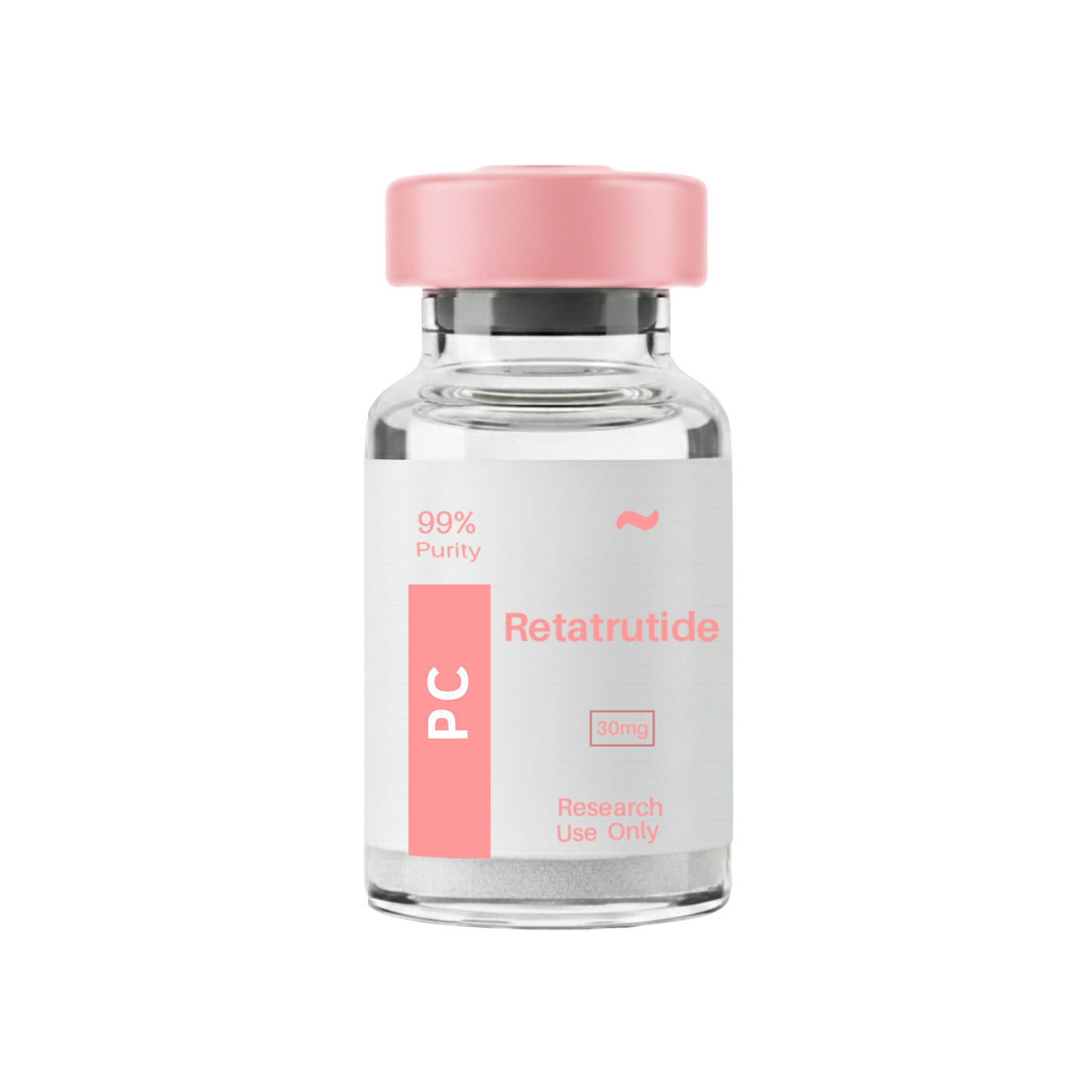
Retatrutide Triple Agonist
This batch of Retatrutide Triple Agonist Peptide has been third party lab tested and verified for quality.
Contents: Retatrutide
Form: Powder
Purity: 99.1%
Couldn't load pickup availability
Free Reconstitution Solution automatically added to your cart with each order.
This product is Made, Tested & Shipped From Canada.
Ships Today
Order by 1:00 PM EST
Free Shipping
For 2 or more vials
Verified+

Retatrutide Peptide
Retatrutide is a synthetic polypeptide recognized as an advanced triple incretin receptor agonist. It is structurally and functionally unique, activating the receptors for three primary metabolic hormones: GLP-1, GIP, and glucagon, all simultaneously. This potent multi-receptor engagement is the subject of extensive research for its broad and powerful effects on metabolic regulation, demonstrating potential therapeutic benefits in obesity, type 2 diabetes, and non-alcoholic fatty liver disease (NAFLD). By combining these three pathways, retatrutide is hypothesized to simultaneously curb appetite, control glucose levels, and increase energy expenditure, thereby offering superior and more comprehensive metabolic improvements compared to single- or dual-agonist treatments.
Retatrutide Peptide Overview
Retatrutide achieves its powerful and diverse metabolic profile through the balanced activation of three key hormone receptors:
Receptor Activated
Mechanism of Action
Observed Research Benefit
GLP-1 Receptor
Stimulates glucose-responsive insulin release; delays gastric emptying.
Leads to reduced blood sugar levels and enhances satiety, promoting weight loss.
GIP Receptor
Potentiates insulin secretion; influences adipocyte function (fat cells).
Works synergistically with GLP-1 for tighter blood sugar control and favorable lipid modulation.
Glucagon Receptor
Increases energy output and encourages the burning of fat (fatty acid oxidation).
Contributes to superior body fat reduction and significant improvement in liver fat composition.
The concurrent activation of the GLP-1, GIP, and glucagon receptors is central to retatrutide’s effectiveness, consistently showing superior outcomes in weight reduction and glycemic control in research trials. Preclinical data indicates that retatrutide’s effects on slowing digestion and decreasing food consumption result in greater overall fat loss than observed with GLP-1 agonists alone. Furthermore, the activation of the glucagon receptor is theorized to elevate the metabolic rate and enhance fat utilization, especially within the liver, resulting in better insulin sensitivity and a marked reduction in hepatic fat accumulation. Overall, retatrutide’s triple-agonist mechanism is engineered to optimize the body's energy balance, glucose regulation, and fat metabolism concurrently.
Retatrutide Peptide Structure
Retatrutide is a synthetic peptide chain consisting of 39 amino acids. Its pharmacological stability and long-acting nature, enabling once-weekly dosing in clinical research, stem from a structural modification: a C20 fatty di-acid is attached to the Lysine residue at position 20. This modification facilitates strong binding to serum albumin, which significantly extends the peptide’s half-life in the circulation. The sequence is optimized for high potency and balanced agonism across the GLP-1, GIP, and glucagon receptors.
Structural Property
Detail
Chemical Formula
C221H340N46O66
Molar Mass
4966.5 g/mol
Amino Acid Sequence
H-Tyr-Ala-Glu-Gly-Thr-Phe-Thr-Ser-Asp-Val-Ser-Ser-Tyr-Leu-Glu-Gly-Gln-Ala-Ala-Lys(C20 di-acid)-Glu-Phe-Ile-Ala-Trp-Leu-Val-Arg-Gly-Arg-Gly-Ser-Ser-Gly-Ala-Asp-Pro-Ser-Lys-Lys-Gln-Pro-Pro-Ala-Ser
Retatrutide Peptide Research
Retatrutide and Metabolic Regulation
Retatrutide’s unique three-receptor activation provides extensive regulatory control over the entire metabolic system. In preclinical studies, the compound demonstrated a robust ability to delay gastric emptying and reduce food consumption, resulting in substantially greater weight loss compared to monotherapies. These potent results are linked to two primary mechanisms: amplified satiety signals (via GLP-1 and GIP) and an increase in energy expenditure (via glucagon receptor activation). The glucagon component is specifically associated with raising the basal metabolic rate and stimulating the breakdown of lipids (fat oxidation).
This holistic metabolic activation leads to broad improvements across various metabolic health indicators. Initial human trials support these effects, showing clear dose-dependent reductions in both body weight and blood glucose concentration. Researchers have also observed marked improvements in insulin sensitivity and other favorable metabolic changes during retatrutide administration, pointing toward a powerful capacity to re-establish metabolic balance. By simultaneously targeting multiple hormonal deficiencies, retatrutide offers a comprehensive investigational strategy for tackling the core characteristics of metabolic disease, including hyperglycemia, excess adiposity, and disordered energy regulation.
Retatrutide and Weight Management
Clinical evidence strongly confirms that retatrutide induces highly effective and profound weight loss in research subjects with obesity. In a 48-week Phase 2 clinical trial, participants treated with retatrutide experienced dramatic, dose-related reductions in body weight. Subjects on the highest weekly dose (12 mg) achieved an average weight loss of approximately 23–24% of their initial body weight after 11 months. This magnitude of weight reduction sets a new and ambitious standard for efficacy, surpassing outcomes typically seen with previous single- or dual-agonist peptide therapies.
Even at moderate doses (such as 4 mg or 8 mg), retatrutide resulted in clinically meaningful weight reductions, with the majority of subjects losing at least 5% of their baseline weight. By week 48, an impressive 83% of participants on the 12 mg dose had achieved a minimum of 15% weight loss. These data emphasize retatrutide’s exceptional anti-obesity efficacy. The treatment was generally well tolerated, displaying a safety profile consistent with other incretin-based therapies, with common side effects being mild, dose-related gastrointestinal issues.
The dramatic reductions in body mass observed in these trials solidify retatrutide’s position as a premier pharmacological agent in obesity research, raising the benchmark for next-generation weight-loss therapies.
Retatrutide and Glycemic Control
Beyond its remarkable effect on body weight, retatrutide has demonstrated notable efficacy in improving glucose regulation for individuals with type 2 diabetes. Results from a Phase 2 clinical study showed that retatrutide treatment significantly improved glycemic control over a 36-week period. Depending on the dose, average HbA1c levels were reduced by approximately 1.3% to 2.0%, compared to minimal change in the placebo group. At the higher doses (8 mg and 12 mg weekly), retatrutide achieved greater reductions in HbA1c than those observed with a comparator GLP-1 agonist (dulaglutide), indicating superior glucose-lowering potential.
Participants with diabetes also experienced significant weight loss, with the highest dose group achieving nearly a 17% reduction in body weight within 8 months, substantially exceeding the placebo response. Importantly, retatrutide’s mechanism is to promote glucose-dependent insulin secretion, meaning it inherently minimizes the risk of hypoglycemia; no severe hypoglycemic episodes were reported in the trial.
Retatrutide’s broad metabolic activity may offer additional therapeutic advantages for diabetic subjects. Preclinical findings suggest potential benefits such as enhanced insulin sensitivity and reduced metabolic stress on organs, which could aid in researching ways to prevent or slow diabetes-related complications. Overall, emerging evidence supports retatrutide as a promising investigational therapy capable of concurrently optimizing blood sugar regulation, body weight, and cardiometabolic health in individuals with type 2 diabetes.
Retatrutide and Liver Health (NAFLD/NASH)
A key area of unique therapeutic interest for retatrutide is its capability to improve liver health, particularly in research subjects affected by non-alcoholic fatty liver disease (NAFLD) and its more serious form, non-alcoholic steatohepatitis (NASH). In a sub-study of obese participants with NAFLD, retatrutide produced marked reductions in liver fat content. After just 24 weeks of therapy, MRI assessments revealed an over 80% decrease in liver fat among those receiving higher doses of retatrutide, compared to almost no change in the placebo group. By 48 weeks, approximately 9 out of 10 patients on the two highest doses (8–12 mg) achieved liver fat normalization to healthy levels, corresponding to a mean reduction of 82–86% and a normal liver fat fraction (<5%) in the majority of treated subjects.
These exceptional reductions in hepatic steatosis suggest retatrutide may effectively resolve fatty liver disease in a significant proportion of patients. Mechanistically, this effect is largely attributed to direct glucagon receptor activation within the liver, where these receptors are highly concentrated. Their stimulation promotes fatty acid oxidation, thereby directly reducing fat buildup in the hepatic tissue. Furthermore, activation of glucagon pathways by retatrutide is thought to decrease oxidative stress in liver mitochondria and may exert anti-fibrotic effects, potentially slowing or reversing the progression of NASH.
Unlike GLP-1 or GIP agonists, where liver benefits are often secondary to weight loss, retatrutide’s direct glucagon-mediated action offers a mechanism that may more effectively target inflammation and fibrosis. Given the current lack of approved pharmacotherapies for NASH, retatrutide’s early evidence of improved liver histology and function is a highly promising area of research. Ongoing investigations are focusing on its impact on liver enzymes, fibrosis markers, and overall hepatic well-being in individuals with metabolic-associated fatty liver disease.
Collectively, these findings position retatrutide as a crucial experimental compound for the investigation and mitigation of NAFLD and NASH, reflecting its extensive systemic metabolic benefits that extend far beyond weight reduction and glycemic control.
Article Author
This literature review was compiled, edited, and organized by Dr. Ania M. Jastreboff, M.D., Ph.D., a globally recognized endocrinologist and expert in obesity medicine. Dr. Jastreboff is distinguished for her pioneering contributions to metabolic therapeutics and incretin-based research. As an Associate Professor of Medicine and Pediatrics at Yale University School of Medicine, she has been a key leader in pivotal clinical trials for multi-agonist peptide therapies, including the investigational compound retatrutide, which targets the GLP-1, GIP, and glucagon receptors. Her work has been instrumental in advancing the scientific understanding of metabolic hormone interactions and their clinical relevance in treating complex metabolic disorders.
Scientific Journal Author
Dr. Ania M. Jastreboff has an extensive research profile in the pharmacological and physiological regulation of metabolism, with a specialized focus on incretin-based therapeutics and their effects on energy balance and glucose homeostasis. She has collaborated with prominent researchers, including Drs. Louis J. Aronne, W. Timothy Garvey, Julio Rosenstock, Juan Pablo Frías, and Arun J. Sanyal, whose combined research efforts have elucidated the synergistic influence of GLP-1, GIP, and glucagon receptor activation on weight reduction, insulin sensitivity, and liver function.
Through her significant publications in elite scientific journals, including The New England Journal of Medicine, The Lancet, and Nature Medicine, Dr. Jastreboff and her team have established retatrutide (LY3437943) as a crucial next-generation therapeutic candidate in the field of metabolic and obesity research.
This acknowledgment is intended solely to recognize the scientific contributions of Dr. Jastreboff and her colleagues. It does not imply any endorsement, sponsorship, or commercial association. Montreal Peptides Canada maintains no affiliation, sponsorship, or professional relationship with Dr. Jastreboff or any of the researchers cited.
Reference Citations
- Jastreboff AM, Kaplan LM, Frías JP, et al. Triple-hormone-receptor agonist retatrutide for obesity - a phase 2 trial. New England Journal of Medicine. 2023;389:514-526. https://www.nejm.org/doi/full/10.1056/NEJMoa2301972
- Rosenstock J, Wysham C, Frías JP, et al. Retatrutide, a GIP, GLP-1 and glucagon receptor agonist, for people with type 2 diabetes: a randomised, double-blind, placebo-controlled, phase 2 trial. The Lancet. 2023;402:529-544. https://www.thelancet.com/journals/lancet/ article/PIIS0140-6736(23)01053-X/fulltext
- Sanyal AJ, Kaplan LM, Frías JP, et al. Triple hormone receptor agonist retatrutide for metabolic dysfunction-associated steatotic liver disease: a randomized phase 2a trial. Nature Medicine. 2024;30:2037-2048. https://www.nature.com/articles/s41591-024-03018-2
- Coskun T, Urva S, Roell WC, et al. LY3437943, a novel triple glucagon, GIP, and GLP-1 receptor agonist: from discovery to clinical proof of concept. Cell Metabolism. 2022;34(9):1234-1247.e9. https://www.cell.com/cell-metabolism/fulltext/S1550-4131(22)00312-6
- Katsi V, Koutsopoulos G, Fragoulis C, Dimitriadis K, Tsioufis K. Retatrutide-A game changer in obesity pharmacotherapy. Biomolecules. 2025;15(6):796. https://www.mdpi.com/2218-273X/15/6/796
- ClinicalTrials.gov. A Study of Retatrutide (LY3437943) in Participants Who Have Obesity or Overweight (TRIUMPH-1/Program). NCT05929066. https://clinicaltrials.gov/study/NCT05929066
- ClinicalTrials.gov. A Study of Retatrutide (LY3437943) in Participants With Type 2 Diabetes Mellitus Who Have Obesity or Overweight (TRIUMPH-2). NCT05929079. https://clinicaltrials.gov/study/NCT05929079
- ClinicalTrials.gov. A Study of Retatrutide (LY3437943) in Participants With Obesity: Maintenance of Weight Loss. NCT06859268. https:// clinicaltrials.gov/study/NCT06859268
- Nature Index entry for Sanyal et al. 2024 (study details & DOI). https://www.nature.com/nature-index/article/10.1038/s41591-024-03018-2
- Springer review: Retatrutide-an investigational triple agonist for obesity and diabetes (overview of safety/efficacy). European Journal of Clinical Pharmacology. 2024. https://link.springer.com/content/pdf/10.1007/s00228-024-03646-0.pdf
ALL ARTICLES AND PRODUCT INFORMATION PROVIDED ON THIS WEBSITE ARE FOR INFORMATIONAL AND EDUCATIONAL PURPOSES ONLY.
The products offered on this website are furnished for in-vitro studies only. In-vitro studies (Latin: in glass) are performed outside of the body. These products are not medicines or drugs and have not been approved by the FDA to prevent, treat or cure any medical condition, ailment or disease. Bodily introduction of any kind into humans or animals is strictly forbidden by law.
STORAGE
Storage Instructions
All products are prepared through a lyophilization (freeze-drying) process, which ensures stability during shipping for an approximate duration of 3–4 months.
Once the peptide powder is reconstituted with bacteriostatic water, it must be stored in a refrigerator to maintain its efficacy. The resulting solution remains stable for up to 30 days under refrigeration.
Lyophilization, or cryodesiccation, is a specialized dehydration method involving freezing the peptide and subjecting it to low pressure. This causes the water to undergo sublimation (a direct change from solid to gas), resulting in a stable, white crystalline powder known as a lyophilized peptide. This powder is safe for storage at room temperature until it is reconstituted with bacteriostatic water.
For extended storage periods, spanning several months to years, the recommended condition is storage in a freezer at -80 deg C (-112 deg F). This deep-freezing temperature is essential for preserving the peptide’s structural integrity and ensuring maximal long-term stability.
Upon receipt, peptides should be kept cool and shielded from light. For short-term use, lasting a few days, weeks, or months, refrigeration below 4 deg C (39 deg F) is adequate. Lyophilized peptides generally remain stable at room temperature for several weeks, which is acceptable for very brief storage periods before use.
Best Practices For Storing Peptides
Proper storage protocols are fundamental to ensuring accurate and reliable results in peptide-based laboratory research. Adhering to correct procedures minimizes the risk of degradation, oxidation, and contamination, thereby maintaining the peptide's effectiveness and stability over time. While the inherent stability of peptides varies, applying these best practices will significantly extend their useful lifespan and preserve their quality.
Upon receipt, store peptides in a cool, dark environment. Short-term storage (up to a few months) requires refrigeration below 4 deg C (39 deg F). Lyophilized powders are typically stable at room temperature for several weeks, which is suitable for very short-term holding.
For long-term preservation, extending over many months or years, peptides must be stored in a freezer at -80 deg C (-112 deg F). These deep-freeze conditions provide the best protection against structural degradation.
It is critical to minimize freeze-thaw cycles, as repeated temperature changes greatly accelerate peptide degradation. Furthermore, avoid using frost-free freezers because their automatic defrost cycles introduce temperature variations that can compromise peptide stability.
Preventing Oxidation and Moisture Contamination
Protecting peptides from air and moisture exposure is essential to prevent stability loss. Moisture contamination is a significant risk when cold peptides are removed from the freezer. To prevent condensation from forming on the cold peptide or inside the container, always allow the vial to reach room temperature before opening.
Minimizing air exposure is equally important for preservation. The peptide container should be kept sealed as much as possible, and promptly closed after the required amount is removed. Storing the remaining peptide under a dry, inert gas atmosphere (such as nitrogen or argon) can offer further protection against oxidation. Peptides containing cysteine (C), methionine (M), or tryptophan (W) residues are highly susceptible to air oxidation and require extra caution.
To maintain long-term stability, avoid frequent thawing and refreezing. A highly recommended strategy is to divide the total peptide quantity into smaller aliquots, each designated for a single experimental run. This method eliminates the need for repeated exposure to air and temperature changes, preserving the integrity of the peptide over time.
Storing Peptides In Solution
Peptide solutions have a significantly shorter shelf life compared to their lyophilized forms and are more susceptible to bacterial degradation. Peptides containing residues such as cysteine (Cys), methionine (Met), tryptophan (Trp), aspartic acid (Asp), glutamine (Gln), or N-terminal glutamic acid (Glu) are known to degrade more rapidly when stored in liquid form.
If storage in solution is unavoidable, it is recommended to use sterile buffers with a pH between 5 and 6. The solution should be aliquoted immediately to minimize freeze-thaw cycles. When refrigerated at 4 deg C (39 deg F), most peptide solutions remain stable for up to 30 days. However, peptides known to be less stable should be kept frozen until immediately prior to use to best preserve their structural integrity.
Peptide Storage Containers
Containers used for peptide storage must be clean, clear, durable, and chemically inert. They should also be sized appropriately to minimize excess air space above the stored peptide. Both glass and plastic vials are suitable. Plastic options include polystyrene (clear, but offers less chemical resistance) and polypropylene (more chemically resistant, though usually translucent).
High-quality glass vials offer the best overall combination of clarity, stability, and chemical inertness for peptide storage. However, peptides are often shipped in plastic containers to minimize the risk of breakage during transit. Peptides can be safely transferred between glass and plastic vials to meet specific storage or handling requirements.
Peptide Storage Guidelines: General Tips
To maintain optimal peptide stability and prevent degradation, follow these essential best practices:
- Store peptides in a cold, dry, and dark environment.
- Avoid repeated freeze-thaw cycles to prevent structural damage.
- Minimize air exposure to reduce the risk of oxidation.
- Protect peptides from light to prevent structural changes.
- Store lyophilized whenever possible; avoid long-term storage in liquid solution.
- Aliquoting is crucial to prevent unnecessary handling and exposure.
Certificate of Analysis (COA): Lab report for this product purity, identity, and chromatograms.
-

HIGHEST QUALITY PEPTIDES
Our products are scientifically formulated and manufactured in cGMP-compliant facilities.
-

FAST DELIVERY
Enjoy fast and reliable 3–5 day shipping.
-

Dedicated Customer Service
Our customer service team is highly knowledgeable in peptide research and its applications. We’re available 24/7 to assist you.
Verified reviews
Tested. Verified. Trusted.
We take a laboratory-first approach to quality. Each batch is made under controlled conditions and verified by an independent lab (HPLC/MS). We only ship batches that test ≥99% purity, and we provide a full COA, including identity, methods, and chromatograms, for your review.
Shop now
See the Process for Yourself
We make our peptides in our own cGMP lab. Watch the video to see how every vial is produced, tested, and handled with care.
Science Behind Our Peptides
A clear explanation of how our peptides work, their benefits, why quality matters for best results, and what you should know.
You may also like
-
SAVE 23%HCG - Research Grade Peptide Hormone
Regular price From $72.00Regular price From $72.00 Sale priceUnit price / per$94.0023% -
SAVE 25%Tirzepatide
Regular price From $50.00Regular price From $50.00 Sale priceUnit price / per$67.0025% -
SAVE 24%Thymosin Alpha-1
Regular price From $79.00Regular price From $79.00 Sale priceUnit price / per$104.0024% -
SAVE 23%Tesamorelin
Regular price From $80.00Regular price From $80.00 Sale priceUnit price / per$105.0023% -
SAVE 23%Survodutide
Regular price $299.00Regular price $299.00 Sale priceUnit price / per$392.0023% -
SAVE 26%Sterile Water
Regular price From $14.00Regular price From $14.00 Sale priceUnit price / per$19.0026% -
SAVE 23%SLU-PP-332
Regular price $125.00Regular price $125.00 Sale priceUnit price / per$164.0023% -
SAVE 23%Sermorelin
Regular price From $70.00Regular price From $70.00 Sale priceUnit price / per$92.0023% -
SAVE 23%Semaglutide
Regular price From $36.00Regular price From $36.00 Sale priceUnit price / per$47.0023% -
SAVE 23%Retatrutide Triple Agonist
Regular price From $90.00Regular price From $90.00 Sale priceUnit price / per$118.0023% -
SAVE 26%Oxytocin Acetate
Regular price $42.00Regular price $42.00 Sale priceUnit price / per$57.0026% -
SAVE 25%Melanotan II (MT2)
Regular price $50.00Regular price $50.00 Sale priceUnit price / per$67.0025% -
SAVE 24%Lipo-C with B Vitamins
Regular price $85.00Regular price $85.00 Sale priceUnit price / per$112.0024% -
SAVE 23%L-Carnitine
Regular price $97.00Regular price $97.00 Sale priceUnit price / per$127.0023% -
SAVE 23%Lemon Bottle 10mg
Regular price $80.00Regular price $80.00 Sale priceUnit price / per$105.0023% -
SAVE 24%KPV Tripeptide
Regular price From $56.00Regular price From $56.00 Sale priceUnit price / per$74.0024% -
KLOW Blend - GHK-CU + TB-500 + BPC-157 + KPV 10mg
Regular price $200.00Regular price $200.00 Sale priceUnit price / per$261.0023% -
Kisspeptin-10 - Premium Research Peptide
Regular price From $65.00Regular price From $65.00 Sale priceUnit price / per$85.0023% -
SAVE 23%Ipamorelin
Regular price From $32.00Regular price From $32.00 Sale priceUnit price / per$42.0023% -
SAVE 24%IGF-1 LR3 (Long R3)
Regular price From $40.00Regular price From $40.00 Sale priceUnit price / per$53.0024% -
SAVE 24%HMG 75iu - Premium Research Peptide
Regular price $80.00Regular price $80.00 Sale priceUnit price / per$106.0024% -
SAVE 24%Hyaluronic
Regular price $28.00Regular price $28.00 Sale priceUnit price / per$37.0024% -
SAVE 23%HGH Fragment 176-191
Regular price $97.00Regular price $97.00 Sale priceUnit price / per$127.0023% -
SAVE 23%HGH 191AA (Somatropin)
Regular price From $55.00Regular price From $55.00 Sale priceUnit price / per$72.0023% -
SAVE 23%HCG - Premium Research Peptide
Regular price From $72.00Regular price From $72.00 Sale priceUnit price / per$94.0023% -
Gonadorelin - Premium Research Peptide
Regular price $50.00Regular price $50.00 Sale priceUnit price / per$67.0025% -
SAVE 23%Glutathione
Regular price From $75.00Regular price From $75.00 Sale priceUnit price / per$98.0023% -
SAVE 23%Glow BPC-157 + GHK-CU + TB-500
Regular price $139.00Regular price $139.00 Sale priceUnit price / per$181.0023%
Every vial we sell comes from a lab that follows current Good Manufacturing Practices (cGMP). That means each step of production is documented and controlled. Before a batch is released, it’s tested by independent third-party labs for purity, identity, and sterility. Certificates of analysis are available so you can see the exact test results.
Yes. The labs we work with use ISO-certified clean rooms where air quality, equipment, and handling procedures are tightly regulated. Staff are trained to pharmaceutical-grade standards. This ensures the peptides are produced in an environment that minimizes contamination risks.
Peptides in lyophilized (freeze-dried) form are stable at room temperature for transport. Once you receive them, refrigeration is recommended to maintain long-term integrity. We package every order securely to prevent damage and ship promptly, so your vials arrive in optimal condition.
We operate under strict in-house protocols that follow current Good Manufacturing Practices (cGMP). That means our team oversees the entire process from sourcing raw amino acids to the final lyophilized vial. Nothing is outsourced or repackaged. This gives us full control over purity, consistency, and sterility, and it’s why we can stand behind every single vial we ship.
Store them in the refrigerator, away from direct light and heat. If you need to keep them longer, some peptides can be stored frozen. Each vial comes with clear handling instructions so you know the proper conditions for stability.
The strongest proof is transparency. For every peptide, we can provide certificates of analysis, manufacturing documentation, and references to the published scientific research behind it. If you ever have questions, we’ll show you the data rather than ask you to take our word for it.
The difference is transparency. Most sites give you a product name and a price. We provide full batch testing, lab documentation, and direct access to certificates of analysis so you don’t have to guess what you’re getting. When you order from us, you know exactly what’s in the vial, where it was made, and how it was verified.