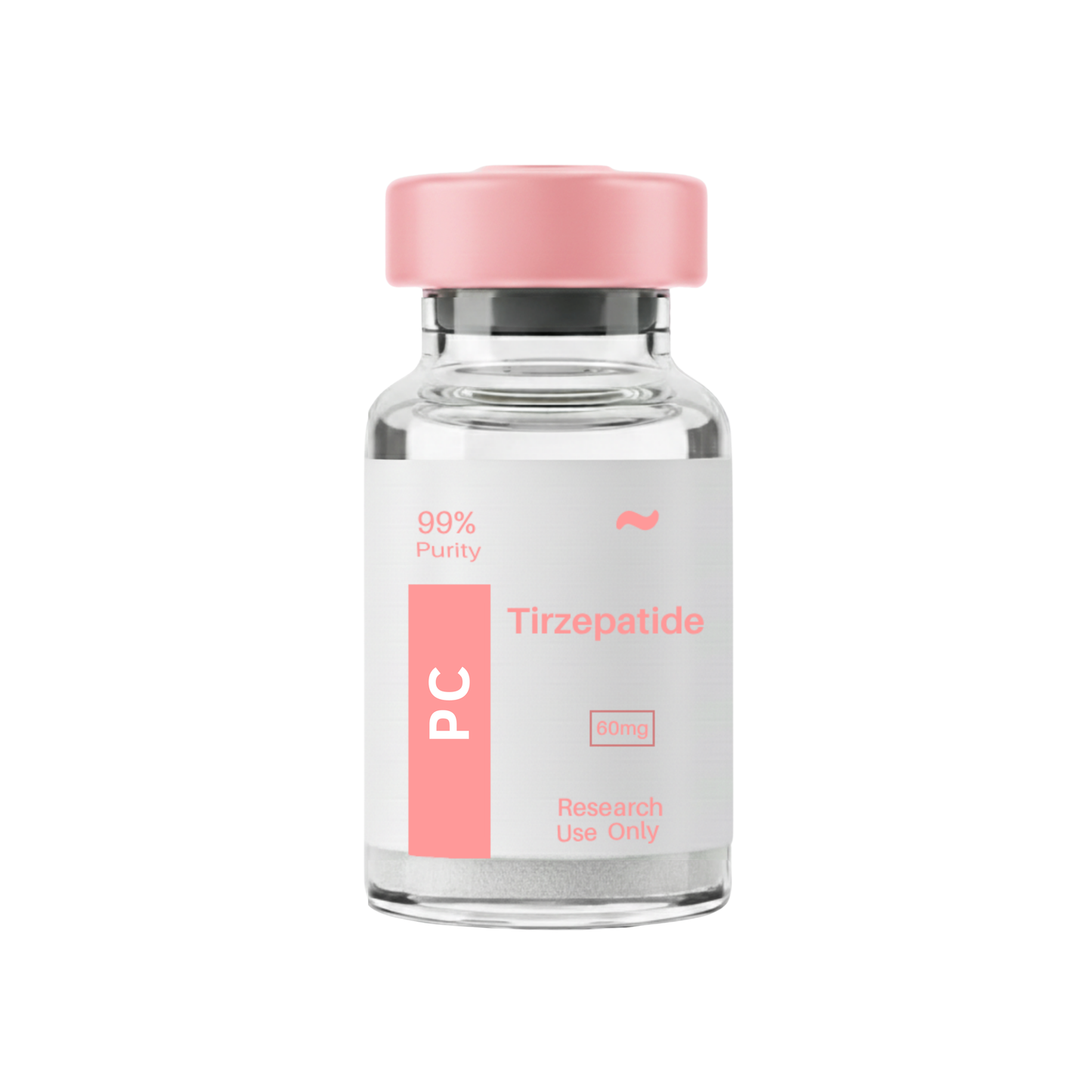
Tirzepatide Peptide
Tirzepatide is a laboratory-synthesized polypeptide precisely engineered with 39 amino acids. It functions as a potent dual agonist for two critical targets: the glucose-dependent insulinotropic polypeptide (GIP) receptor and the glucagon-like peptide-1 (GLP-1) receptor. This molecular architecture is specifically designed to replicate the coordinated biological effects of native incretin hormones, which are essential for core processes like blood glucose regulation, energy balance maintenance, and central appetite control. As a cutting-edge compound, Tirzepatide is an indispensable tool in metabolic and endocrine research, driving the study of advanced, incretin-based strategies for improving glycaemic stability and achieving comprehensive body weight management.
Tirzepatide Peptide Overview
Tirzepatide is distinguished by its simultaneous activation of both GIP and GLP-1 receptors within a single, unified structure. This dual mechanism is the fundamental basis for its observed synergistic metabolic efficacy, delivering enhanced outcomes in stimulating insulin secretion, strategically suppressing counter-regulatory glucagon release, and effectively modulating appetite signaling in research models.
The molecule's remarkable longevity is achieved through the chemical attachment of a C20 fatty diacid group to the Lysine residue at position 20 (Lys20). This specific lipid modification allows for high-affinity, reversible binding to serum albumin, which is the established pharmacokinetic principle that dramatically extends the peptide's circulating half-life.
Comprehensive data from preclinical and clinical investigations consistently demonstrate that Tirzepatide induces significant, dose-responsive reductions in blood sugar metrics and overall body mass. Furthermore, research highlights its positive influence on systemic lipid profiles and the restoration of insulin sensitivity. These powerful, integrated properties make it a premier research standard for exploring coordinated incretin signaling and pathways related to metabolic optimization.
Tirzepatide Peptide Structure
Tirzepatide is a linear polypeptide consisting of 39 amino acids. Its critical C20 fatty diacid modification provides the necessary albumin-binding capacity for its extended action.
The definitive structural sequence is:
- Amino Acid Sequence: Tyr-Aib-Glu-Gly-Thr-Phe-Thr-Ser-Asp-Tyr-Ser-Ile-Leu-Leu-Asp-Lys-Gln-Met-Ala-Ala-Lys(C20 diacid)-Glu-Phe-Val-Gln-Leu-Phe-Ala-Trp-Leu-Ile-Glu-Pro-Phe-Asp-Arg-Ala-Thr-Phe-Arg
Tirzepatide Structure Solution Formula (Plain Text):
The calculated elemental formula is C225 H348 N50 O68, corresponding to a precise Molecular Weight of 4813.52 grams per mole.
Tirzepatide Peptide Research
Tirzepatide is an essential compound for researchers investigating the complex, integrated results of dual GIP and GLP-1 receptor activation across various dimensions of metabolic health:
Glucose Homeostasis
The peptide promotes insulin secretion in a manner that is strictly glucose-dependent, ensuring that insulin is primarily released when blood glucose levels are elevated, thereby reducing the risk of undue hypoglycemia in models. This action, coupled with effective glucagon suppression, results in superior, sustained glycaemic control. Research, including head-to-head comparisons, shows markedly greater reductions in HbA1c compared to monotherapy using GLP-1 receptor agonists.
Body-Weight Regulation
Tirzepatide's dual agonism directly modulates the hypothalamic neural circuits that govern satiety and energy intake. This action leads to a measurable reduction in food consumption and a resultant, significant reduction in body mass documented across various in vivo and clinical research environments.
Insulin Sensitivity and Lipid Metabolism
Studies indicate that Tirzepatide plays a crucial role in restoring systemic insulin sensitivity in key tissues, including the liver and muscle. Mechanistically, it also helps lower circulating plasma triglyceride levels, supporting the establishment of a more favorable lipid metabolic profile in models of metabolic dysfunction.
Cardiometabolic and Hepatic Function
The comprehensive actions of dual incretin agonism are under investigation for broad systemic benefits, which include:
- The attenuation of markers of systemic inflammation.
- Improvement in vascular endothelial function and cardiovascular health.
- Enhancement of hepatic lipid clearance, which helps reduce liver fat content.
These findings position the compound as a key subject for research into cardioprotective and hepatoprotective mechanisms.
Mechanism and Pharmacokinetics
The lipid modification (C20 fatty-acid chain) enables robust binding to serum albumin. This mechanism extends the peptide's elimination half-life to approximately five days (observed in relevant non-human primate models). This prolonged pharmacokinetic profile makes it ideally suited for research protocols requiring a once-weekly dosing regimen for the study of long-term metabolic efficacy.
Summary of Tirzepatide's Dual Action
Receptor Activated
Primary Mechanism of Action
Key Research Outcome
GIP Receptor
Potentiation of insulin release; support for fatty acid metabolism pathways.
Optimization of postprandial glucose control and favorable modulation of lipid markers.
GLP-1 Receptor
Inhibition of glucagon; central reduction of appetite and energy intake.
Significant and consistent reduction in body weight and improvement in energy balance.
Dual (GIP/GLP-1)
Synergistic metabolic benefits sustained by extended plasma circulation half-life.
Comprehensive therapeutic efficacy across glycaemic, weight, and lipid indices.
Storage
Storage Instructions
All products are prepared using the advanced process of lyophilization (freeze-drying). This method is critical for preserving the peptide's chemical stability and integrity throughout the shipping duration, typically covering 3–4 months.
Lyophilization, or cryodesiccation, is a meticulous dehydration technique: the frozen peptide has its water removed by sublimation under a vacuum. The end product is a chemically stable, high-purity, white crystalline powder, known as the lyophilized peptide powder. This stable form allows for safe storage at ambient room temperature until the product is ready for reconstitution.
- After Reconstitution: Once dissolved in bacteriostatic water for research use, the peptide must be immediately stored under refrigeration (kept below 4 degrees C, or 39 degrees F) to maximize its potency and stability. The solution will typically maintain stability for up to 30 days under correct refrigeration.
- Long-Term Storage (Lyophilized): For extended research periods lasting many months to years, the lyophilized peptide must be stored in an ultra-low temperature freezer at -80 degrees C (-112 degrees F). These conditions provide the optimal environment for maintaining long-term molecular integrity.
- Short-Term Storage (Lyophilized): Upon receipt, the peptide must be kept cool and shielded from all light sources. For short-term experimental needs (days to a few months), refrigeration below 4 degrees C (39 degrees F) is sufficient. While the lyophilized powder can tolerate room temperature for several weeks, refrigeration is always the superior option for maximizing short-term stability.
Best Practices For Storing Peptides
Rigorous adherence to standard storage protocols is absolutely necessary to ensure the reliability, potency, and reproducibility of all laboratory results. Proper handling minimizes the risk of physical, chemical, and biological degradation.
Preventing Oxidation and Moisture Contamination
It is paramount to protect peptides from exposure to atmospheric air and moisture, as both are significant accelerators of degradation.
- Moisture Control: Condensation is a primary risk when removing peptides from frozen storage. To prevent moisture from being absorbed inside the vial, always allow the sealed peptide container to fully equilibrate to ambient room temperature before opening the seal.
- Air Exposure: The time the peptide vial is open must be minimized. After retrieving the required amount, the container must be promptly and securely resealed. Storing the unused peptide under a dry, inert gas atmosphere (e.g., nitrogen or argon) is a recommended advanced technique to further guard against oxidation.
- Oxidation Sensitivity: Peptides containing the amino acid residues Cysteine (C), Methionine (M), or Tryptophan (W) are particularly prone to oxidation and require the highest level of handling care.
Aliquot Method: To preserve long-term integrity, repeated freezing and thawing cycles must be strictly avoided. The definitive best practice is to divide the total peptide sample into smaller, single-use aliquots. This prevents the main inventory from unnecessary thermal stress and repeated chemical exposure.
Storing Peptides In Solution
Peptides stored in an aqueous solution exhibit a significantly shorter usable shelf life and are far more susceptible to chemical and biological degradation than the lyophilized form.
- Stability Concerns in Solution: Peptides featuring Cysteine (Cys), Methionine (Met), Tryptophan (Trp), Aspartic acid (Asp), Glutamine (Gln), or N-terminal Glutamic acid (Glu) residues are generally considered more susceptible to degradation in solution.
- Protocol: If solution storage is essential, use sterile, non-contaminating buffers within a controlled $\text{pH}$ range (typically $\text{pH}$ 5.0-6.0). The solution must be aliquoted and stored under refrigeration at 4 degrees C (39 degrees F) for a maximum of 30 days. Compounds not in immediate use should be frozen for optimal long-term preservation.
Peptide Storage Containers
Containers must be clean, chemically inert, appropriately sized, and transparent. Sizing should minimize the air headspace above the product.
- Material Options: High-quality glass vials offer optimal inertness and are preferred for long-term stability. While plastic is often used for shipping, transfer to glass is acceptable for specific long-term storage or experimental requirements.
Peptide Storage Guidelines: General Tips
Guideline
Purpose and Rationale
Store Cold, Dry, and Dark
Essential to prevent degradation from heat, moisture, and light exposure.
Avoid Repeated Freeze-Thaw Cycles
Critical practice for preserving the peptide's structural integrity and potency.
Minimize Air Exposure
Reduces the risk of chemical oxidation, especially for sulfur-containing residues.
Protect from Light
Guards against photolytic degradation, which can alter the peptide's chemical structure.
Store Lyophilized (Long-Term)
Provides the highest degree of chemical stability and the longest possible shelf life.
Aliquot Peptide Samples
Prevents degradation and contamination by minimizing handling of the bulk inventory.
Reference Citations
Frias JP, et al. Tirzepatide versus semaglutide in type 2 diabetes. N Engl J Med. 2021;385(6):503–515. https://pubmed.ncbi.nlm.nih.gov/34170647/
Coskun T, et al. LY3298176, a novel dual GIP and GLP-1 receptor agonist for the treatment of type 2 diabetes. Sci Transl Med. 2018;10(467):eaao6119. https://pubmed.ncbi.nlm.nih.gov/30404864/
Willard FS, et al. Tirzepatide: discovery and preclinical profile. Cell Metab. 2020;31(3):564–574.e5. https://pubmed.ncbi.nlm.nih.gov/32084394/
Heise T, et al. Pharmacokinetics and pharmacodynamics of the dual GIP/GLP-1 receptor agonist Tirzepatide. Clin Pharmacokinet. 2022;61(3):359-372. https://pubmed.ncbi.nlm.nih.gov/34694692/
Drucker DJ. Mechanisms of incretin hormone action. Cell Metab. 2018;27(4):740-756. https://pubmed.ncbi.nlm.nih.gov/29551581/
Thomas MK, et al. Dual incretin receptor agonists in metabolic research. Diabetes Obes Metab. 2020;22(12):2368-2378. https://pubmed.nchi.nlm.nih.gov/32706522/
Heise T, et al. Safety, tolerability, and pharmacology of Tirzepatide in humans. Diabetes Care. 2020;43(12):2910-2918. https://pubmed.ncbi.nlm.nih.gov/32978147/
Samms RJ, et al. Effects of dual GIP/GLP-1 receptor agonism on energy metabolism. Nat Metab. 2020;2(6):556-563. https://pubmed.ncbi.nlm.nih.gov/32694636/
Urva SR, et al. Pharmacokinetic and pharmacodynamic modeling of Tirzepatide. Diabetes Obes Metab. 2021;23(1):220-227. https://pubmed.ncbi.nlm.nih.gov/32862523/
Nauck MA, et al. Incretin therapies and metabolic disease mechanisms. Diabetologia. 2021;64(9):1971-1985. https://pubmed.ncbi.nlm.nih.gov/34050724/