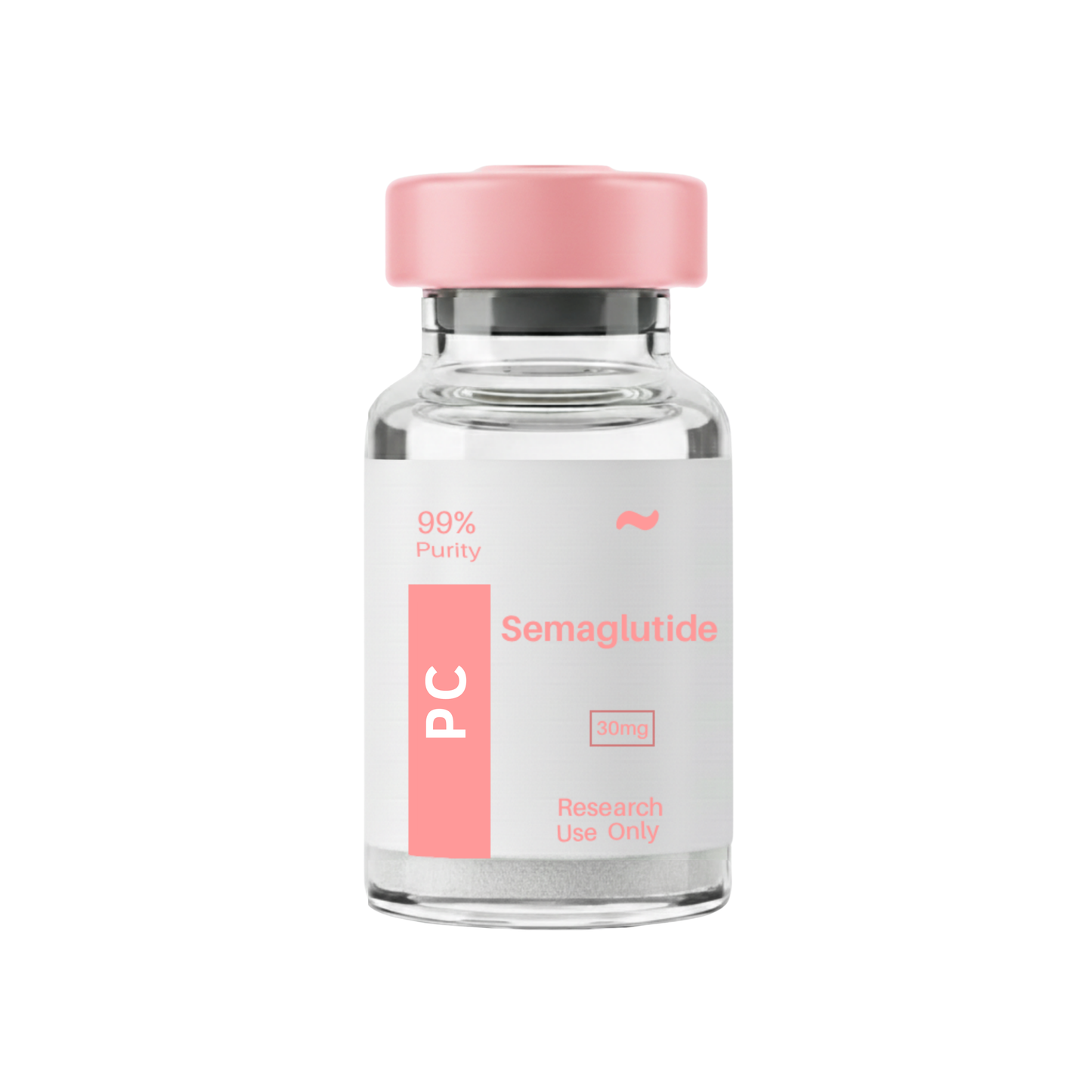
SEMAGLUTIDE PEPTIDE
Semaglutide is a chemically engineered synthetic analogue of glucagon-like peptide-1 (GLP-1), a vital incretin hormone. It has been meticulously modified to confer significant protection against enzymatic degradation and to facilitate robust, reversible binding to serum albumin, the primary carrier protein in plasma. This dual modification results in a markedly extended duration of action. As a high-affinity GLP-1 receptor agonist, Semaglutide is a critical research compound for investigating glucose homeostasis, the neuroendocrine control of appetite and energy expenditure, and comprehensive strategies for cardiometabolic risk reduction.
SEMAGLUTIDE PEPTIDE OVERVIEW
Semaglutide functions as a long-acting, highly selective GLP-1 receptor agonist (GLP-1RA). Its metabolic effect is characterized by its capacity to enhance the secretion of insulin from pancreatic beta-cells and simultaneously suppress the inappropriate release of glucagon, both responses being glucose-dependent. This balanced action helps maintain euglycemia without creating an excessive risk of low blood sugar.
The peptide’s influence extends beyond the endocrine system. It contributes to improved metabolic balance by slowing the rate of stomach emptying (gastric motility) and by interacting with key neural circuits in the hypothalamus that regulate feelings of hunger and fullness. These combined mechanisms are highly relevant to research involving appetite control and weight management, which have been consistently validated in experimental models.
The superior pharmacokinetic profile of Semaglutide is due to its precision engineering:
- Resistance to Dipeptidyl Peptidase-4 (DPP-4): The strategic substitution of the amino acid at position 8 with alpha-aminoisobutyric acid effectively blocks the access and action of the DPP-4 enzyme, the main degradative pathway for native GLP-1.
- Extended Circulatory Half-Life: The attachment of a C18 fatty diacid moiety via a linker to the Lysine residue at position 26 enables strong, non-covalent binding to albumin. This binding significantly delays renal clearance and metabolic processing.
These modifications successfully extend the plasma half-life to approximately one week, supporting stable receptor activation over prolonged periods required for chronic disease research.
SEMAGLUTIDE PEPTIDE STRUCTURE
Attribute
Detail
Sequence
HXEGTFTSDVSSYLEGQAAK-OH.steric diacid-EFIAWLVRGRG
Molecular Formula
C187H291N45O59
Molecular Weight
4113.58 g/mol
PubChem CID
56843331
CAS Number
910463-68-2
Synonyms
Semaglutide, NN9535, OG217SC, NNC 0113-0217, GLP-1 receptor agonist (GLP-1RA), long-acting GLP-1 analog
Structural Solution Formula (Simplified)
The chemical structure of Semaglutide is a GLP-1 derivative with N-terminal protection by L-Histidine. Stability is provided by the substitution of alpha-aminoisobutyric acid at position 8. The extended duration of action is achieved by attaching a C18 octadecanedioic acid side chain (steric diacid) via a gamma-L-glutamic acid spacer to the epsilon-amino group of Lysine at position 26, promoting albumin binding.
SEMAGLUTIDE PEPTIDE RESEARCH
Glucose Metabolism
Semaglutide is extensively studied for its powerful effects on maintaining glucose homeostasis. It functions by amplifying insulin secretion and simultaneously suppressing glucagon release, specifically when blood glucose concentrations are elevated. This crucial glucose-dependent mechanism ensures effective blood sugar reduction. Research in models of metabolic syndrome and diabetes demonstrates that Semaglutide enhances insulin sensitivity, improves overall glycemic control, and supports the health and function of pancreatic beta-cells.
Appetite and Weight Regulation
Research confirms Semaglutide’s significant utility in exploring the control of energy balance. By activating GLP-1 receptors in the hypothalamus, the peptide affects neuronal pathways responsible for satiety and hunger. This results in reduced caloric consumption, increased feelings of fullness, and modulation of reward-driven feeding behaviors. Across multiple research settings, these effects translate into measurable reductions in body weight and adiposity, establishing Semaglutide as a primary research compound for obesity studies.
Cardiometabolic Function
Beyond its core metabolic actions, Semaglutide is critical for research into cardiovascular risk factors. Studies suggest it can beneficially influence hemodynamics by lowering both systolic and diastolic blood pressure. It also modulates lipid metabolism, typically resulting in reduced triglycerides and LDL cholesterol, and often an increase in HDL cholesterol. Furthermore, its potential role in mitigating systemic inflammation and oxidative stress underscores its importance in comprehensive cardiometabolic research.
Liver and Metabolic Health
In research models pertaining to Nonalcoholic Fatty Liver Disease (NAFLD) and Nonalcoholic Steatohepatitis (NASH), Semaglutide has shown the ability to reduce liver fat content (hepatic steatosis) and improve liver enzyme profiles. These effects are believed to be linked to improved systemic insulin sensitivity and reduced intra-hepatic inflammation. This positions Semaglutide as a valuable tool for studying metabolic interventions against progressive liver diseases.
Pharmacokinetics
The optimized pharmacokinetic profile of Semaglutide is crucial for long-term experimental stability. The albumin-binding mechanism successfully prolongs the functional plasma half-life to approximately seven days. This sustained presence ensures continuous engagement with the GLP-1 receptor, simplifying chronic study protocols and leading to consistent and reliable biological outcomes over extended research periods.
Note: Semaglutide peptide is intended strictly for research and laboratory use only and is not approved for human consumption.
ARTICLE AUTHOR
The information presented above was compiled, reviewed, and organized by Dr. Jens Lau, PhD.
Dr. Lau is a distinguished peptide chemist, widely recognized for his instrumental role in the discovery, chemical modification, and development of Semaglutide, a pioneering long-acting GLP-1 receptor agonist. His doctorate in chemistry provided the foundation for significant contributions to advanced peptide drug design, with a dedicated focus on enhancing the structural stability and metabolic longevity of GLP-1 analogs.
SCIENTIFIC JOURNAL AUTHOR
Dr. Daniel J. Drucker is a globally preeminent endocrinologist and academic, whose research is documented in over 500 peer-reviewed publications and is highly cited worldwide. His foundational scientific work focuses on incretin hormone biology, the mechanisms of GLP-1 receptor signaling, and the translation of this research into GLP-1 based therapeutics for metabolic disorders, including diabetes and obesity.
Dr. Drucker is acknowledged as a leading authority whose research underpins the scientific understanding of GLP-1 receptor agonists, including Semaglutide. He is cited exclusively for his documented scientific contributions and is not an endorser or promoter of this product. There is no commercial or professional relationship, expressed or implied, between this supplier and Dr. Drucker. Referencing his work serves only to credit his critical role in advancing the scientific knowledge base of GLP-1 receptor mechanisms and their therapeutic applications. Dr. Daniel J. Drucker is referenced in [2] within the citation list.
REFERENCE CITATIONS
[1] Lau J, et al. Discovery of Semaglutide, a long-acting GLP-1 analog. J Med Chem. 2015;58(18):7370-7380. https://pubmed.ncbi.nlm.nih.gov/26307822/
[2] Drucker DJ. Mechanisms of action and therapeutic application of GLP-1 receptor agonists. Cell Metab. 2018;27(4):740-756. https://pubmed.ncbi.nlm.nih.gov/29551581/
[3] Jensen L, et al. Semaglutide pharmacokinetics and metabolic effects. Diabetes Obes Metab. 2017;19(1):34-43. https://pubmed.ncbi.nlm.nih.gov/27699838/
[4] Wilding JPH, et al. Semaglutide and weight management in clinical research. N Engl J Med. 2021;384(11):989-1002. https://pubmed.ncbi.nlm.nih.gov/33567185/
[5] Davies MJ, et al. Semaglutide's impact on glucose control and body weight. Lancet Diabetes Endocrinol. 2017;5(5):341-354. https://pubmed.ncbi.nlm.nih.gov/28237263/
[6] Nauck MA, et al. GLP-1 receptor agonists in metabolic disease models. Diabetologia. 2016;59(4):763-776. https://pubmed.ncbi.nlm.nih.gov/26802080/
[7] Holst JJ, et al. Physiology of GLP-1 and receptor pathways. Physiol Rev. 2017;97(2):1409-1439. https://pubmed.ncbi.nlm.nih.gov/28356471/
[8] Newsome PN, et al. Semaglutide in nonalcoholic steatohepatitis research. N Engl J Med. 2021;384(12):1113-1124. https://pubmed.ncbi.nlm.nih.gov/33761207/
[9] Nauck MA, Meier JJ. Pharmacology of GLP-1 receptor agonists. Diabetologia. 2019;62(10):1808-1823. https://pubmed.ncbi.nlm.nih.gov/31201557/
[10] Marso SP, et al. Cardiovascular outcomes with Semaglutide in metabolic studies. N Engl J Med. 2016;375(19):1834-1844. https://pubmed.ncbi.nlm.nih.gov/27633186/
STORAGE
Storage Instructions
This product is supplied as a stable, white powder produced via lyophilization (freeze-drying). This advanced dehydration method is essential for preserving peptide activity, ensuring stability during shipping for roughly 3 to 4 months.
- Lyophilized Peptide (Powder): For short-term usage (weeks to months), the lyophilized peptide can be stored under refrigeration, below 4 degrees Celsius (39 degrees Fahrenheit), or even at controlled room temperature. For optimal, long-term archival storage spanning years, the material must be kept in a freezer at -80 degrees Celsius (-112 degrees Fahrenheit).
- After Reconstitution (Solution): Once dissolved using bacteriostatic water, the peptide solution must be stored in a refrigerator, strictly maintained below 4 degrees Celsius (39 degrees Fahrenheit). Peptide solutions typically retain experimental stability for up to 30 days.
Best Practices For Storing Peptides
Strict adherence to storage protocols is non-negotiable for preserving the accuracy and reproducibility of laboratory data. Proper handling minimizes the risk of chemical degradation, contamination, and oxidation.
Storage Condition
Time Frame
Temperature
Notes
Lyophilized (Powder)
Short-term (Weeks/Months)
Below 4 degrees C (39 degrees F) or Ambient Temp
Keep shielded from light. Appropriate for near-term use.
Lyophilized (Powder)
Long-term (Years)
-80 degrees C (-112 degrees F)
Recommended standard for maximizing shelf-life and structural integrity.
Reconstituted (Solution)
Short-term (Up to 30 Days)
Below 4 degrees C (39 degrees F)
Must be mixed only with sterile, bacteriostatic water.
General Storage Guidelines:
- Environment: Store peptides in a consistently cold, dry, and dark location.
- Thermal Cycling: Avoid all repeated freeze-thaw cycles, which rapidly damage peptide structure. Do not use "frost-free" freezers as their automated defrosting cycles introduce destabilizing temperature variations.
- Aliquoting: For multi-use, long-term studies, it is strongly advised to divide the bulk peptide into smaller, single-use aliquots immediately upon receipt. This prevents repeated handling and exposure of the entire sample.
Preventing Oxidation and Moisture Contamination
Moisture and air are the primary catalysts for peptide degradation, particularly when transitioning from cold storage.
- Condensation Control: When removing frozen vials, allow the container to fully equilibrate to room temperature before the seal is broken. This prevents ambient water vapor from condensing inside the cold vial, which contaminates the peptide powder.
- Atmospheric Protection: Keep the peptide container sealed as much as possible. After dispensing the required amount, promptly reseal the vial. For peptides known to be highly sensitive to oxygen (e.g., those containing Cysteine, Methionine, or Tryptophan), storage under an inert gas atmosphere (such as nitrogen or argon) can provide additional protection.
Storing Peptides In Solution
Aqueous solutions of peptides are inherently less stable and more vulnerable to chemical and microbial degradation than the lyophilized form.
- Susceptible Residues: Peptides containing Cysteine, Methionine, Tryptophan, Aspartic acid, Glutamine, or N-terminal Glutamic acid residues degrade more quickly in solution.
- Buffer Requirements: If solution storage is essential, use sterile buffers maintained at a mildly acidic $\text{pH}$ (typically between 5 and 6).
- Aliquot and Freeze: Always aliquot peptide solutions to minimize freeze-thaw cycles. Less stable solutions should be stored frozen when not required for immediate experimental use.
Peptide Storage Containers
The container selection affects long-term purity and stability.
- Material and Fit: Containers must be clean, chemically inert, durable, and sized to minimize excess air space (headspace).
- Options: High-quality glass vials offer superior chemical inertness. Plastic vials (polystyrene or polypropylene) are also acceptable, often used for shipping due to their resilience.
- Transfer: Transferring the peptide from a plastic shipping container to a glass vial may be considered for optimal long-term archival storage.