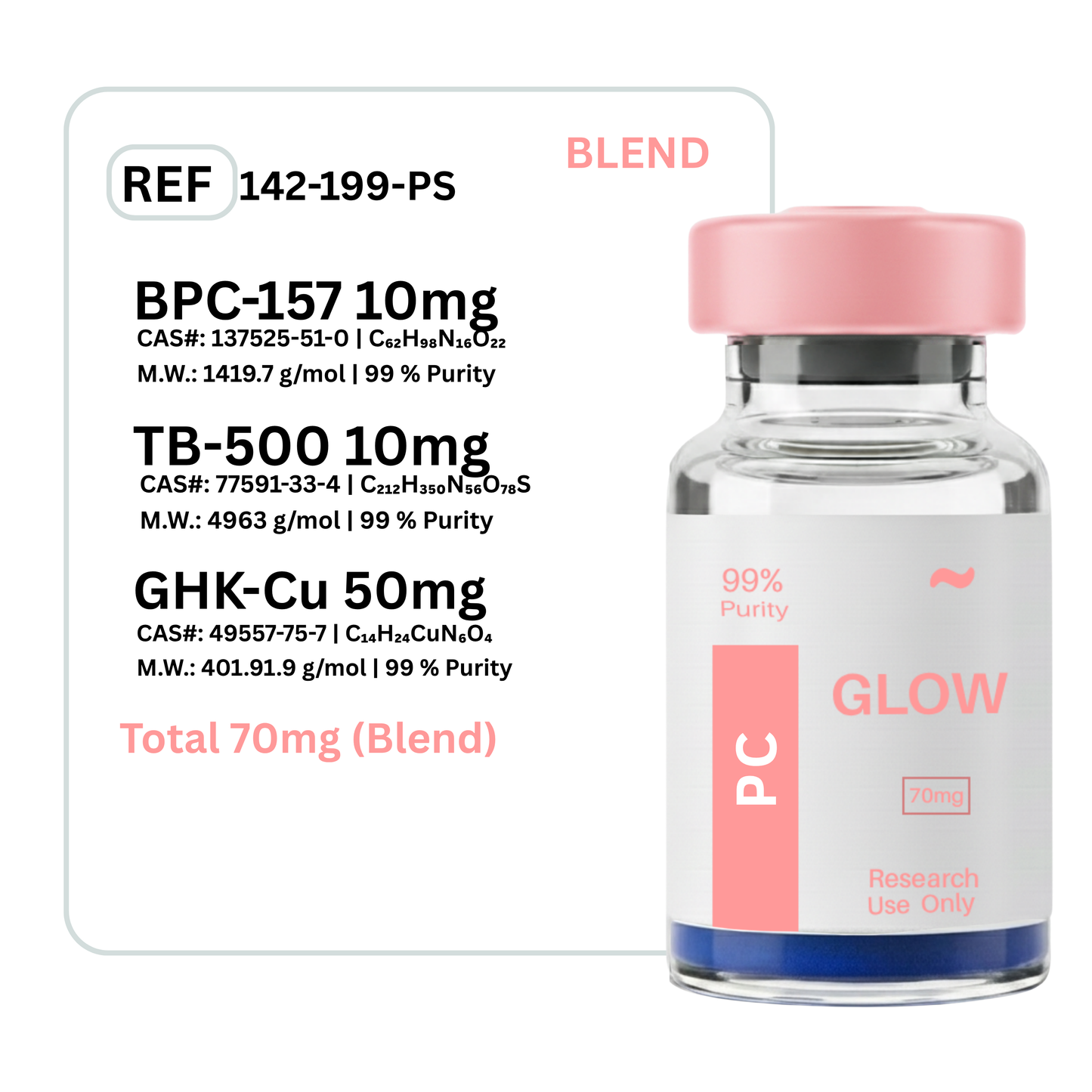
BPC-157 + TB500 (Thymosin Beta 4) + GHK-Cu Blend
This blend combines three potent anti-inflammatory and regenerative peptides: BPC-157, TB500 (Thymosin Beta 4), and GHK-Cu. Individual research demonstrates these compounds' capabilities, including acceleration of wound healing, delay of tissue deterioration, promotion of muscle and tendon growth, modification of DNA damage, alteration of collagen production, and enhancement of keratinocyte characteristics.
The rationale for combined administration is the potential for synergistic applications across the domains described above. Investigations into combined peptide applications established the BPC-157 + TB500 + GHK-Cu Blend formulation. Researchers found this combination facilitates peptide storage, administration, and management, allowing investigators to focus on measuring therapeutic outcomes and establishing experimental protocols.
Current analysis examines the collective actions of BPC-157, TB500, and GHK-Cu, explaining the enhanced (synergistic) outcomes from combined administration. Comprehensive analysis demonstrates the likely substantial promise of these peptides for disease management through animal model investigations.
BPC-157: Biochemistry
A principal function of BPC-157 involves regulating nitric oxide (NO) signaling throughout the organism. Investigations indicate BPC-157 counteracts hemorrhagic vascular distribution reduction following known NOS suppression. Furthermore, BPC-157 demonstrates a positive influence on Nitric Oxide Synthase (NOS) activity, particularly eNOS manifestation, resulting in enhanced angiogenic vascular formation. Elevated physiological concentrations of nitric oxide enhance the immune system and provide substantial physiological improvement throughout hemolytic conditions. NO supplementation generates vasoconstrictive resistance, which is particularly beneficial in hemolytic disorder management where direct heme compound NO binding initiates chemical and biochemical cascades.
Investigations demonstrate BPC-157's prompt absorption and distribution throughout the organism following administration. Research indicates that 10 minutes post-administration, BPC-157 is distributed throughout multiple tissues, encompassing renal, hepatic, cardiac structures, thymus, gonadal organs, and spleen. Tissue approximation levels remain elevated following 1-hour administration periods, subsequently demonstrating gradual elimination patterns.
A final conclusive aspect regarding BPC-157 biochemistry indicates its capabilities in modulating genetic expression patterns. The precise mechanisms remain incompletely elucidated, but the peptide functionality potentially operates through regulatory mechanisms controlling expression patterns of:
- Egr
- Nos (especially eNOS)
- Srf
- Vegr
- Pcry, and
- Kcas
These genetic structures regulate the synthesis of multiple factors influencing vascular cellular and immune system components, including adhesion molecules, thrombosis factors, and inflammatory mediators.
TB500: Biochemistry
TB500 represents a derivative of thymosin beta-4, a naturally occurring protein that exhibits established anti-inflammatory and tissue restoration characteristics. Similar to thymosin beta-4, TB500 primarily operates through actin regulation, modulating angiogenesis and facilitating cardiac repair, immune modulation, and central nervous system restoration. Evidence indicates its hair growth promotion capabilities while combating aging manifestations.
TB500 possesses dual primary functional mechanisms. First, its cellular operations involve actin regulation, essential for cellular maintenance and mobility requirements. This function holds critical importance throughout wound healing processes and cellular migration required for immune system functionality. Accelerating cellular mobility and stimulating new blood vessel development through cytokine stimulation demonstrates accelerated wound healing, reduced inflammation, and blood vessel proliferation capabilities.
TB500's secondary function involves inflammation regulation through genetic expression pattern modifications, rather than direct actin regulation. Investigations demonstrate TB500's capacity for modifying genetic patterns engaged in nitric oxide production, blood vessel proliferation, cellular multiplication, and additional functions. The extensive regulatory functions demonstrate TB500's capacity for modulating multiple signaling mechanisms essential for immunological system recovery, encompassing PDKI/Akt-NOS, Notch, and angiogenin-1/Tie2 pathways supporting regeneration.
Furthermore, it regulates the TGF-beta cascade through SMAD signaling, representing critical angiogenesis functionality. Evidence demonstrates TB500's influence on Wnt signaling capabilities for generating extracellular matrix and dermal cell formation and migration.
GHK-Cu: Biochemistry
GHK-Cu represents a naturally occurring copper complex comprising a brief peptide sequence bound to copper II. Initial identification occurred in human serum, subsequently detected throughout multiple biological tissues. Animal research demonstrates its significance in wound restoration and anti-inflammatory responses. Established understanding indicates its anti-aging, anti-oxidant, and anti-inflammatory characteristics alongside dermal fibroblast proliferation capabilities.
GHK-Cu demonstrates functional activity through stimulating metalloproteinase enzyme synthesis. These enzymes catalyze specific protein degradation to facilitate wound restoration. Furthermore, it regulates anti-protease generation, preventing excessive protein fragmentation via oxidative degradation pathways. Analogous to BPC-157, GHK-Cu functions by coordinating comprehensive wound restoration mechanisms through genetic regulatory modulation, enhancing comprehensive healing capabilities, especially dermal restoration.
BPC-157 + TB500 + GHK-Cu Blend: Synergistic Effects
Anti-Inflammatory Effects
The primary characteristic of this combination is their comprehensive control and direction of the inflammatory response toward enhanced recovery.
Among these agents, BPC-157 exhibits significant anti-inflammatory properties, preserving anti-inflammatory characteristics when activated following injury. BPC-157 modulates nitric oxide production, a principal anti-inflammatory mechanism within biological systems.
GHK-Cu supplementation generates further synergistic effects because its anti-inflammatory properties overlap with nitric oxide synthesis capabilities while preventing certain negative consequences. GHK-Cu scavenges free radicals, potentially mitigating adverse effects from excessive nitric oxide generation and subsequent tissue destruction. GHK-Cu simultaneously diminishes the critical inflammatory cascade through inflammatory tissue restoration mechanisms.
Tissue Repair
These therapeutic agents facilitate tissue restoration throughout virtually every bodily domain, accelerating recovery and optimizing surgical outcomes.
BPC-157 functions as an effective peptide for wound restoration, enhancing long-term structural parameters and functionality following tendon damage. Emphasis centers on BPC-157's capacity for supercharging growth hormone receptor functionality and fibroblast proliferation. Since fibroblasts are primary cellular components for wound restoration, BPC-157's enhancement of their activity generates correspondingly elevated TB500/GHK-Cu concentrations, providing compounding advantages near injury sites.
TB500 facilitates extracellular matrix formation while generating novel capillary structures. This mechanism involves the migration of satellite cells, which are stem cells that differentiate into cellular components necessary for restoration (e.g., heart cells).
GHK-Cu enhances conduit formation and introduces novel vascular channels for the differentiation pathway. GHK-Cu additionally functions to suppress TNF-alph and interleukin-8 signaling, consequently amplifying TB500's anti-inflammatory properties through blood vessel formation and cellular proliferation modulation. GHK-Cu also neutralizes oxidants, which enables diminished scar tissue formation during wound healing processes.
Anti-Bacterial Properties
The peptides' anti-bacterial capabilities contribute toward establishing cleaner healing environments, optimizing applications for surgical incisions and traumatic wounds.
BPC-157 exhibits no particular antimicrobial properties, yet demonstrates a supportive function by enhancing circulatory supply to immune system cells combating infectious agents.
TB500 demonstrates diverse advantages in suppressing microbial proliferation. It exhibits anti-microbial characteristics restricting bacterial and fungal development and facilitates enhanced penetration of endogenous and synthetic antimicrobial agents into tissue environments.
GHK-Cu employs a distinct methodology for diminishing bacterial infections, with evidence indicating it decreases infection rates in wounds by 27%. This is achieved through collagen production, which potentially generates robust anti-microbial barriers preventing bacterial invasion and biofilm establishment.
Anti-Aging Effects
Collectively, the advantages of BPC-157, TB500, and GHK-Cu in facilitating tissue restoration and diminishing inflammation indicate their profound potential for supporting longevity. Aging manifestations stem substantially from deteriorating tissue restoration mechanisms and subsequent inflammatory escalation.
TB500 demonstrates utility as an effective agent in regenerative medicine, particularly valuable for managing age-associated tissue deterioration. Mouse embryo investigations demonstrate TB500's significance in cardiac tissue regeneration, promoting myocyte survival while enhancing cardiac functionality after coronary artery damage.
Similarly to TB500, BPC-157 possesses cardiac advantages, facilitating enhanced circulatory function to cardiac myocytes while diminishing blood pressure and improving clotting of compromised blood vessels.
GHK-Cu demonstrates potential for suppressing NFKB activity, supplying DNA repair enhancement, and strengthening cellular repair mechanisms. These transformations collectively enhance repair capabilities throughout tissues like dermis, neural structures, hepatic, renal, gastrointestinal, skeletal muscle, and osseous tissues.
BPC-157 + TB500 + GHK-Cu Blend: Summary
The substantial research regarding the capabilities of BPC-157, TB500, and GHK-Cu in accelerating tissue restoration, diminishing inflammation, and defending the organism against diverse diseases warrants recognition, particularly for their established value individually. Noteworthy attention centers on their capacity to decelerate and potentially reverse certain aging manifestations.
Research investigations aim to generate additional advantages in tissue restoration, disease prevention, and health advancement when these compounds function synergistically. The critical consideration involves ensuring appropriate balance across all three compounds rather than singular improvement focus, as combining these agents generates optimal outcomes when they act cooperatively.